






EDITION→
Global
•
USA
•
UK
•
AUNZ
•
CANADA
•
IRELAND
•
FRANCE
•
GERMANY
•
ASIA
•
EUROPE
•
LATAM
•
MEA
Edition : InternationalLanguage : English
HOME
NEWS
CREATIVE LIBRARY
IMMORTAL AWARDS
MEMBER COMPANIES
PEOPLE
JOBS
How LBB WorksPlans & PricingEditorial Toolkit

news
NEWS
CREATIVE LIBRARY
IMMORTAL AWARDS
MEMBER COMPANIES
PEOPLE
JOBS
Login or Register
People in association withThe Monthly Cut
Why Good Producers Will Always Be in Demand with Andrew Illson

lbbonline.com
0
LIKE
ADD TO COLLECTION
04/08/2026
Share
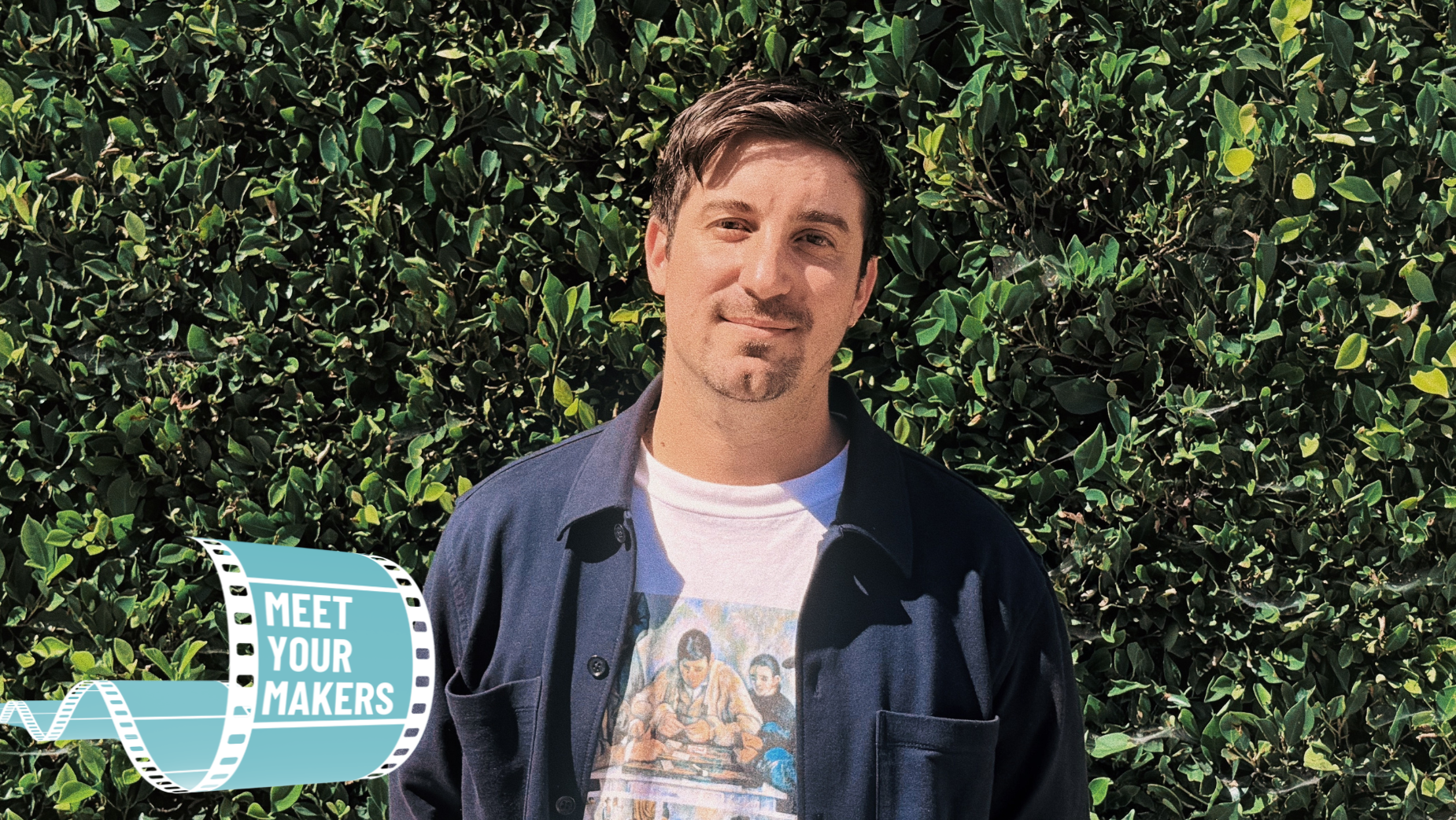
The Modern Post West Coast executive producer looks back on early lessons in production on set, as well as his proudest work, as part of LBB’s Meet Your Makers series
Andrew Illson is the West Coast executive producer at Modern Post. A San Diego native, Andrew moved to New York City in 2012, where he spent nearly a decade building his career in creative, production and post production roles. He joined Modern Post in 2019 as a senior post producer, before returning to the West Coast to launch and run the LA office.
Andrew has produced award-winning projects for top brands, directors, and musical artists. His leadership on projects has led teams to several accolades, including MTV Music Video Awards, Clios, AICP, Webby’s, and HVMA Post Production Company of the Year.
Throughout his career, Andrew has worked with top brands including Meta, Victoria’s Secret, Calvin Klein, Target, Walmart, Gucci, Louis Vuitton, Nike, Spotify, Tom Ford, La Mer, adidas, and with artists including Lady Gaga, Madonna, Billie Eilish, Rosalía, and Tate McRae. Beyond post-production, Andrew has produced stage visuals for major concert tours with artists including Jay-Z, Justin Timberlake, and Pharrell – experience that reflects the breadth of his career across film, TV, live production, and brand content.
Andrew sat down with LBB to discuss his unique path into production, challenging and pivotal experiences of his career, as well as Fyre Festival production stories.
LBB> What first attracted you to production – and has it been an industry you’ve always worked in, or did you come to it from another area?
Andrew> To be honest, production was never really on my bingo card. I grew up playing music in bands, and looking back, I think this taught me a lot about collaborating with a team of artists. As a drummer, I sometimes felt like the least creative member of the band. I could never bust out my guitar at a party, or sit down at the piano; I was the one sitting next to the other guys, slapping my knees or a bongo if I was lucky. But I was typically the one responsible for leading from behind, organising the band practices, keeping things on schedule, and managing the egos and ideas of my other band members. I still relate to this as a producer today.
When I got to college, I was studying advertising and film in a very liberal arts format. I was completely lost in my career path, but I knew I wanted to find a job in a creative industry. I had a good friend who was studying design at SVA and I would visit there often. I fell in love with the energy of New York City and the types of people I would meet there. I was determined to move there when I graduated, regardless of my career. I serendipitously landed an internship with a production company, Washington Square Films (WSF), and it all just sort of snowballed from there.
LBB> What was your first role in the production world and how did this experience influence how you think about production and how you grew your career?
Andrew> About a month before, as I was headed to New York for my summer internship at WSF, the founder of the company, Josh Blum, called me to tell me they were filming a movie called ‘All Is Lost’ with Robert Redford. They were shooting in Rosarito, Mexico, which was about an hour from where I was living in San Diego.
At the time, I was more interested in spending the summer in New York with my friends than my career in production, so I almost passed. Thankfully, he convinced me it would be a much more valuable experience than working from the production office, where I would be making runs and taking coffee orders – so I listened and took him up on the opportunity.
I ended up spending two months on location in Mexico, helping out wherever and whenever I could. I had no idea what I was doing, but I was eager and ambitious, and I gave it my all. By the end of the production, I went from being the random college intern to being credited as the key set PA on the film. I helped out in almost every department and learned the ins and outs of how a real production works.
The thing that stuck with me the most was the relationship of the crew. I realised that production was like the circus – the crew becomes a big dysfunctional family for a few months, and at the end, everyone packs up and goes their separate ways, onto the next one. I made some invaluable connections, and by the time I graduated from college the next year, I already had a whole network of people to reach out to. A few gigs later, I was officially part of the circus, and there was no turning back.
LBB> How did you learn to be a producer?
Andrew> Trial by fire, and fake it until you make it. I moved to New York and spent several years PAing on set for mostly indie features. I accepted whatever opportunities were presented to me. I went from the paperwork PA, first team PA, walkie PA, office PA, to assistant location manager, production coordinator, production manager, and eventually to producing small projects for my friends, until I finally got a call from my friend, Brett Kincaid at Matte Projects.
He said they were looking for a post production manager to oversee the post department at their agency. I had never worked in post, but he added something along the lines of, ‘It’ll take a few days to learn terminology, but once you get the hang of it, it’s mostly just common sense’. And I have been working in post ever since.
LBB> Looking back to the beginning of your career, can you tell us about a production you were involved in where you really had to dig deep and that really helped you to grow as a producer?
Andrew> Being the production coordinator on a feature film called ‘Custody’ was definitely one of the most challenging and pivotal experiences of my career. Up until that point, I had mostly only been a PA, but I had worked with the line producer and production manager on a few other projects, and they trusted me enough to throw me in the deep end.
I was 23 or 24, dealing with SAG contracts, unions, locations, equipment rentals, truck rentals, crew schedules, call sheets, meal penalties, timecards, payroll – basically running the office at every level on a multi-million dollar production. I was figuring it out day by day, and by the end, I felt like I had gained years of experience in just a few months. This gave me the confidence and understanding that nothing is impossible.
LBB> A good producer should be able to produce for any medium, from film to events to digital experience. Do you agree or disagree with this statement? Why/why not?
Andrew> I think the core skills of producing definitely apply to all different mediums. I also think you can be a great producer in a specialised medium, and that can be just as valuable.
The more experience you have in a variety of different formats, the more confidence you will have to be able to speak the language and lead the conversations in these different environments.
After Matte Projects, I started working as a post producer at Good Company. We worked on several projects, producing stage visuals on world tours for artists like Jay-Z, Justin Timberlake and Pharrell. I was overseeing teams of editors, animators, and VFX artists, while also collaborating with the lighting designers, creative directors and the music directors of the shows.
These projects were always fast and furious – being on site at rehearsals as the show was being created and evolving in real time. This taught me so much about the post-production process – what’s possible and what’s not, how long things take, etc. – and to this day, I still use this knowledge when assembling teams and developing plans for more traditional content and advertising.
LBB> What’s your favourite thing about production and why?
Andrew> For me, it’s all about the team camaraderie. The work can be gruelling. The egos can be big. The clients can be demanding. But maintaining a positive attitude and coming out the other side feeling like you all accomplished something together is what keeps us all coming back.
At the end of the day, we are making incredible work with like-minded people for the whole world to see. We’re all a bit insane, and it is not for the faint of heart, but I feel so fortunate to be able to do what we do, and it’s important not to lose sight of that.
LBB> How has production changed since you started your career?
Andrew> It changes every day… Nothing is consistent. The scope of work goes up. The budgets fluctuate. The talent gets surpassed. In many ways, things have become simpler with the advancement of technology, but the expectations and workloads rise with it.
It’s a constant battle, and I think we’re all especially going through it together right now with the looming advancements of AI and how this may or may not impact the industry. I just try to keep my head down and push through. Cooler heads and quality work will prevail.
LBB> And what has stayed the same?
Andrew> Coffee in the morning, and a cold beer at the end of the day.
LBB> What do you think is the key to being an effective producer – and is it something that’s innate or something that can be learned?
Andrew> Tenacity, empathy, good communication, and the ability to problem-solve. I think anything can be learned if you want it badly enough. But I do tend to see it innately in people, and there’s usually a gut instinct when it comes to good producers.
LBB> Which production project from across your career are you most proud of and why?
Andrew> Vogue’s ‘I Love NY’, edited by Will Town and directed by Bardia Zeinali, was a project I post-produced during covid-19. I just think it captured the zeitgeist of the times so well, and has remained timeless and something I continue to watch over and over again to this day.
LBB> And in terms of recent work, which projects have you found to be particularly exciting or have presented particularly interesting production challenges?
Andrew> Music videos can often be the most exciting, and are almost always the most challenging. There are usually very unrealistic timelines, low budgets and high expectations for post, which is actually a big problem and really needs to change.
But they are also the jobs that tend to lead to new work and opportunities for the talent. Lady Gaga’s ‘Abracadabra’, edited by Sofia Kerpan and directed by Bethany Vargas, is one that comes to mind that felt like such a historic moment in time, and I think it had an especially positive impact for everyone involved.
LBB> Producers always have the best stories. What’s the hairiest / most insane situation you’ve found yourself in and how did you work your way out of it?
Andrew> My go-to claim to fame production story will always be shooting in the Bahamas for the Fyre Festival promo video. On the yachts. With the super models. Private planes. Sitting next to Bella Hadid in the viral mannequin challenge.
We had no idea at the time that it would become what it did… we were just brought on to shoot the promo and were excited to be in the Bahamas. But we were for sure looking around at each other, saying, ‘Wtf are we doing here? This can’t be real, right?’.
Fortunately, there was nothing for me to really work my way out of… it was actually my last week at that job. But I sure had a great time watching it all unfold after that.
LBB> What are your personal ambitions or aspirations as a producer?
Andrew> As an executive producer at a post house, I think it’s really just about making sure the editors and artists we represent are getting the best opportunities possible. Also, that the team feels good and supported. And that the quality of the work never suffers and keeps improving. I try to remove myself from the equation and let the work speak for itself.
LBB> As a producer your brain must have a neverending ’to do’ list. How do you switch off? What do you do to relax?
Andrew> It never really switches off… I’ve been trying to reduce screen time at night and in the morning. I think we can all use a bit of that. I’ll step outside. Meditate. Vacations are important. But you learn to take it day by day. I’ve usually found that if I have a stressful day at work, the next day is almost always better. Patience is key, and nothing really matters.
LBB> Producers are problem solvers. What personally fuels your curiosity and drive?
Andrew> Being on the cutting edge of an industry that is constantly changing. And pushing things forward as part of the collective whole. Things can be unpredictable, and problem-solving is the job. The ability to adapt and pivot is key. Trusting your gut to have the right solution at the right moment, in every moment, is the fuel that drives me to keep pushing.
LBB> What advice would you give to people who are interested in becoming a producer?
Andrew> Just start. Put yourself in places and situations that will lead to more opportunities. Being a producer is not always the most glamorous part of production, but it can be a steady and consistent career, and a way to be involved in work that you can be proud of. The talent and artists come and go, and it is always a fine line and a lot of pressure for them to make a name for themselves and stay relevant. But good producers will always be needed.
LBB> From your experience what are the ingredients for a successful production?
Andrew> Good creative, healthy budgets, and reasonable schedules. Or at least two of the three, as the saying goes.
LBB> What’s the key to a successful production-client relationship?
Andrew> Trust, forgiveness and mutual respect. Some projects can be more challenging than others, and the ingredients and teams involved are always changing. Building and maintaining trust and understanding with clients where they can count on the collective team, despite the circumstances and challenges of a particular project, is what leads to lasting relationships. Always try to go above and beyond, and never hold a grudge.
LBB> Producers are naturally hands on – they have to be. How do you balance that in the more managerial role of an EP?
Andrew> Hiring and training a strong team with a collective vision and mutual excitement for the work is the key. When you can trust the people around you to be accountable, you learn to let go, and delegation becomes natural.

People in association withThe Monthly Cut
More News from Modern Post
Work of the Week: 31/07/2601/08/2026
Energy Brand UPDATE Reveals Kim Kardashian’s Secret to Getting Everything Done23/07/2026
The Growing Importance of Great Colourists with Taylor Schafer17/07/2026
ALL THEIR NEWS
Work from Modern Post
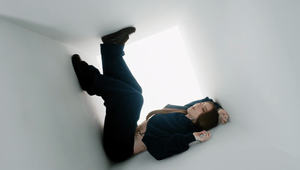
SP26 – Young Miko – WASSUPGap
10/03/2026
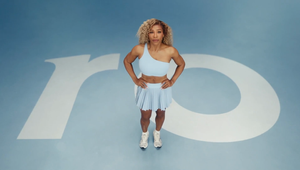
Healthier on Ro, with Serena Williams – Super Bowl AdRo
28/01/2026
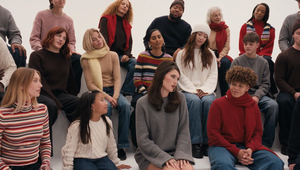
Give Your GiftGAP
05/11/2025
ALL THEIR WORK
SUBSCRIBE TO LBB’S newsletterEnter your email
FOLLOW US
Events
DPA + SLA (+ US Add.)
MyLBB Score
About Us
Contact
Editorial Toolkit
Help & FAQ
Privacy Policy
Main Terms & Conditions
Newsletters
Create your own LBB icons
How it works
Plans & Pricing
LBB’s Global Sponsor

