


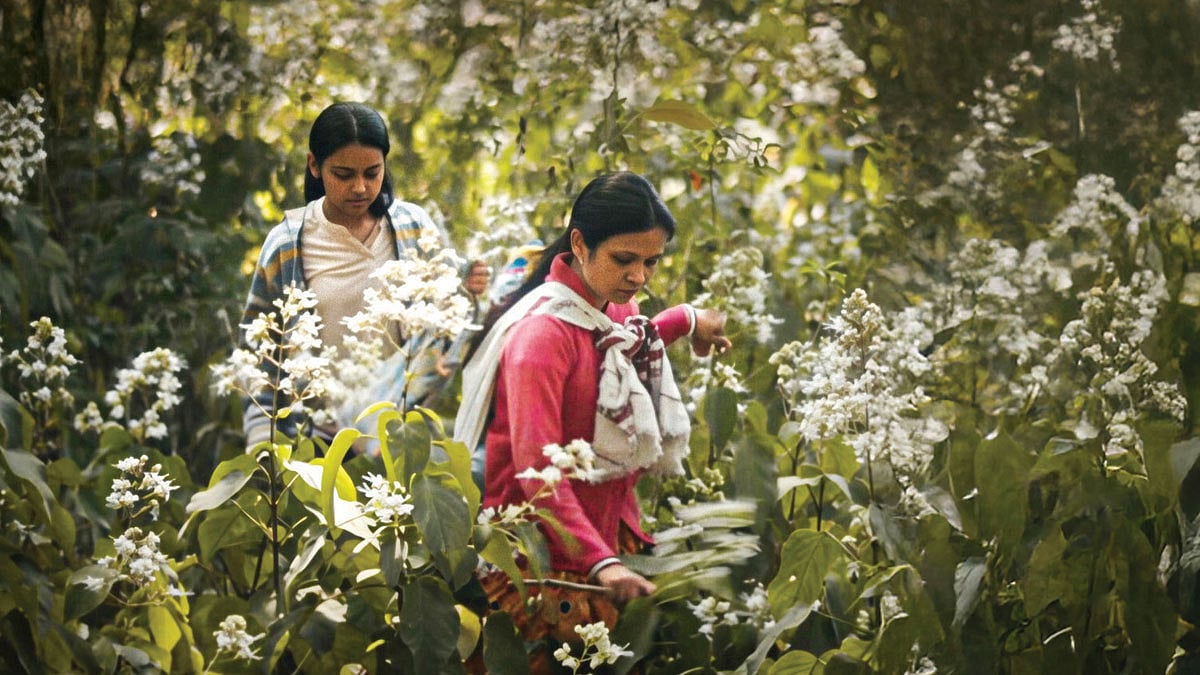
WHEN FILMMAKER Kanu Behl’s Agrascreened at the Directors’ Fortnight section at the 2023 Cannes Film Festival, it received a five-minute standing ovation. Two years later, it was fighting simply to be seen. It wasn’t that Indian audiences had rejected the film. They weren’t given the opportunity to discover it in the first place. When Agrafinally released last November, Behl barely had time to read reviews or respond to congratulatory messages. He found himself doing something unusual on release day: refreshing the BookMyShow page.
“I did not expect to spend the day chasing exhibitors for more theatrical screenings,” Behl says. Those were not the only calls he was fielding; friends and well-wishers were enquiring where they could watch the film. “One friend from Punjab told me the only screen playing Agrawas almost 12 kilometres away,” recalls Behl. Even in Mumbai, the film had barely 10 shows, tucked away in neighbourhoods that were not linguistically or culturally aligned to the film. “Geography really matters,” he explains. A film can release and still remain invisible if it is playing in a theatre far removed from audiences likely to seek it out.
“Indie films such as mine do not fit into the larger chain of programming of multiplexes,” laments Behl. “As an independent filmmaker, you are prepared for a battle. But when I realised the night before release how few screens we had received, my heart sank.” He took matters in his own hands by campaigning relentlessly. At 8pm on opening day, he turned to X and posted a list of the handful of shows. Urging cinema-goers to watch before the shows disappeared, he wrote: “We fought hard. Please show up and support.”
His struggle resonated with fellow indie filmmakers. National award-winning Rahul Dholakia described the fight as “humiliating”, recalling his own experience with Parzaniain 2007. He revealed how he purchased every ticket at a Mumbai multiplex only to later resell them, allowing the film to have a chance at the theatres and preventing the show from being cancelled. Almost two decades later, the struggle still persists.
Behl argues that the larger problem lies in how multiplex programming continues to be regulated by automated occupancy benchmarks. If a film fails to achieve 20 per cent occupancy, it begins to lose shows or is pushed to less favourable slots—such as early mornings or late nights. Independent (indie) films lack the budget for sprawling publicity campaigns, press tours, reality show appearances and influencer marketing. Their audience is built gradually—a complimentary tweet by a celebrity, a glowing film review or a recommendation by a friend. The lack of opportunity to co-exist alongside mainstream films is the real challenge, say filmmakers.
Each year, Indian independent films make their presence felt at a slew of film festivals: Shaunak Sen’s All That Breatheswon the Grand Jury Prize in World Cinema Documentary Competition at the 2022 Sundance Film Festival. Rohan Parashuram Kanawade’s Sabar Bondawon the Grand Jury Prize in 2025 at the same festival. Varsha Bharath’s Bad Girlwon the NETPAC Award at the 54th International Film Festival Rotterdam. Anuparna Roy won the Best Director award in the Orizzonti (Horizons) section of the Venice International Film Festival last year for Songs of Forgotten Trees, and Payal Kapadia’s All We Imagine As Lightwon the Grand Prix at Cannes in 2024.
YET ON RETURN to India, festival films rarely secure significant show timings. For years, these frustrations were restricted to festival corridors, where filmmakers traded stories about cancelled shows and elusive exhibitors. Most accepted their fate but Agramoved the needle. The day after the film was released, Behl found himself at a panel discussion alongside fellow indie filmmakers. His wounds from the previous day were still fresh, and the discussion took an unexpected turn. The rest of the panel nodded in unison, eventually sharing their own experiences. “It was Alankrita Srivastava, Hardik Mehta and Arati Kadav who said, ‘We have to do something’,” Behl recalls. Within a week, a joint statement from 46 independent filmmakers demanding exhibition equity and fair access was released.
The conversation spilled over to WhatsApp groups, Zoom calls and more discussions where it crystallised into Independent Filmmakers’ Association of India (IFAI), a not-for-profit collective of 160 filmmakers. IFAI made its public debut at this year’s Cannes Film Festival. Apart from Behl, other founding members include Anshuman Jha, Alankrita Shrivastava, Ruchi Narain, Sudhanshu Saria, Parth Saurabh, Harsh Agarwal and Honey Trehan.
“When 160 filmmakers huddle together, it is no longer a one-film problem. It becomes the IFAI’s problem. A collective voice holds higher bargaining power than a lone voice,” says Jha, who directed the film Lord Curzon Ki Haveli. “This is a pan-India movement, which is entirely member-driven. And members are invited from all regions of the country.” Currently, the organisation is still building its architecture. “We try to meet twice a week,” Behl says. The discussion is not just centred on lobbying multiplex owners to give more screens. It is also focused on building a community first.
The movement’s goals are expanding beyond advocacy. “There are many proposals being discussed,” says Jha. Differentiated ticket price is one. “Why should a `5 crore film be priced the same as a `100 crore film? We need to give <a href="https://cinemamix360.com/website_97b25373/2026/07/27/comic-con-2026-all-the-movie-and-tv-announcements-you-need-to-know/” title=”Comic-Con 2026: All the movie and TV announcements you need to know”>movie-goers an incentive to bank on something new,” he says. Another idea is a fixed screening model—a dedicated time slot at a single theatre.
“The battle isn’t just about independent filmmaking. The real battle is ensuring it reaches people,” says Jha, This realisation shaped the release of his film, Lord Curzon Ki Havelilast year. Instead of chasing an unrealistic pan-India rollout, he opened with 70 carefully calibrated screens. “I knew it wouldn’t be a blockbuster. The objective was to prove there is an audience nonetheless. Once you know who your audience is, you tend to think differently about where you want to release the film,” he says.
For Akkshay Rathie, film exhibitor and Director of Ashirwad Theatres Pvt Ltd, multiplexes are in the business of filling seats—not in the business of choosing between mainstream and independent films. “The business depends on people showing up. And any film, independent or otherwise that is drawing people in, will stay.” He rejects the assumption that exhibitors only back studio-led films. “If the film is doing well, we will add shows. There have been times when shows have increased over a weekend just because it was doing well.” He cites the Gujarati film Laalo-Krishna Sada Sahaayate(2025), “It was only in its third week that the film started running to packed houses, compelling us to triple the shows. Exhibitors are willing to back any film that audiences embrace.” Laalotoday is the highest-grossing Gujarati film of all time.
WHEN THE PROSPECT of a festival favourite getting a theatrical release seems bleak, imagine the plight of Humans in the Loop, which premiered at the MAMI Mumbai Film Festival. “My film did not travel to Berlin or Cannes. It premiered in Mumbai,” says filmmaker Aranya Sahay. He is aware that the informal hierarchy of film festivals could further diminish his chance at visibility. “The whole point of making it was to give the audience a theatrical experience.” In a different strategy, backed by his producers Storiculture and SAUV Films, he set out to host 100 community screenings. The team launched a grassroots campaign titled ‘Host a screening in your city’ and Humans in the Looptravelled through universities, cultural centres, independent venues, film clubs and spaces where people were willing to host a screening. “By the end of six months, over 7,000 people had watched the film,” Sahay says.
When Humans in the Loopgot a theatrical release in September, it was not beginning from nothing. Theatre chain Cinepolis gave it a single show (enough to qualify for Oscars consideration) but the film’s reputation preceded it. “More shows were added and the film further travelled to 13 cities.” It finally found its home on Netflix. Filmmakers assume distribution begins after production. Sahay flipped the script. He says, “Community screenings are not a distribution model. They are a marketing model. By the time the film is ready for a theatrical run, the audience is already built and distributors/exhibitors more welcoming.”
Shivendra Singh Dungarpur, founder of Film Heritage Foundation, understands this predicament. Having spent decades restoring classics and championing indie films, he has witnessed independent cinema survive as ‘independent’ in every sense of word. In Which Annie Gives It Those Onesis another example, a 1989 Doordarshan film by Pradip Krishen, which had a limited theatrical release this March. Dungarpur refused to treat it as a conventional release. “I walked into a meeting with PVR and requested them to price tickets at `100; they agreed to `150 instead.” He identified cities where the film could find a favourable audience, worked with exhibitors in picking show timings and ensured the release didn’t coincide with a blockbuster. “Consciously, we decided to screen it only over the three-day weekend to get maximum footfall,” he explains.
The idea was to chase maximum viewership—not maximum revenue. It is this ideology that birthed MAMI Independent, a year-round initiative launched by the MAMI Mumbai Film Festival that brings Indian independent films into Mumbai’s PVR each Wednesday. “You would hear about films premiering at Cannes and then we wouldn’t know anything about it. The disappearance back home is jarring,” says Dungarpur. To him, the problem extends beyond indie films struggling to find screens. “It reflects a structural failure spanning financing, exhibition and distribution.”
The IFAI refrains from dismissing exhibitors and distributors as adversaries. They do understand that theatres need to fill seats. “We are fully aware of the economics of film exhibition. What we are trying to create is an ecosystem where indie films have an opportunity to have a life span to find its rightful audience,” says Jha. Whether the collection succeeds in building an exhibition model for indie films to not only survive but thrive, remains to be seen.
Indie filmmakers are not waiting for solutions. Some are leveraging social media to rally audiences, others are hosting community screenings while the rest are negotiating for show timings, and pricing. To them, distribution is no longer an afterthought.
