


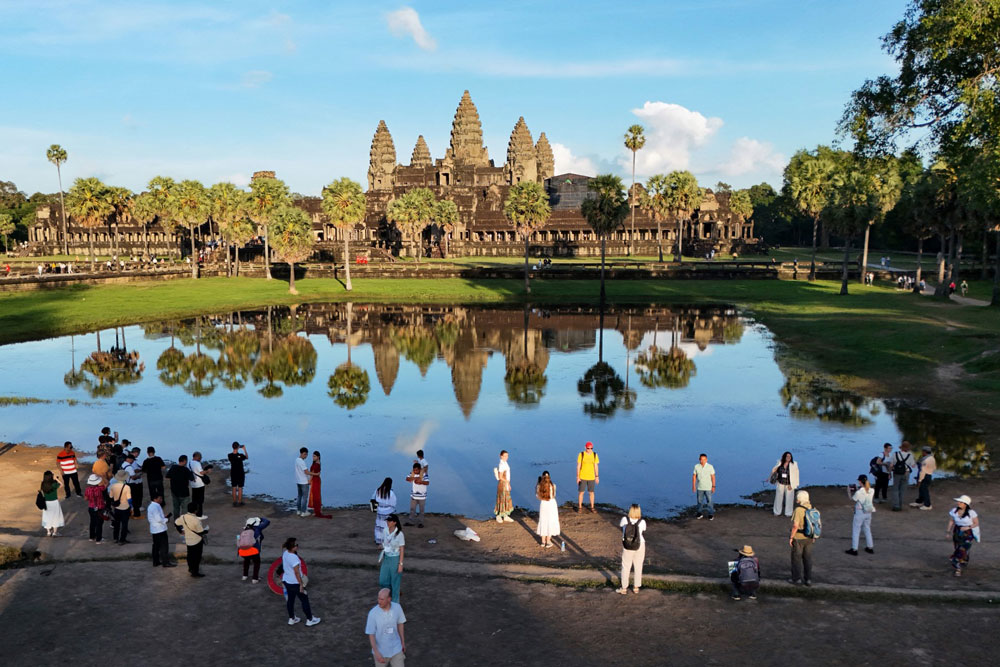
Cambodia is seeking to position itself as a destination for international film productions as part of a broader push to turn cinema into a new tourism driver, with officials and filmmakers looking to transform the Kingdom’s appearances on screen into real-world visits, economic opportunities and greater international exposure
The initiative brings the tourism and film sectors closer together, with the government hoping that Cambodia’s cultural heritage, historical sites, landscapes and unique national identity can reach millions of viewers through films and encourage audiences to subsequently experience the country for themselves.
Minister of Tourism Huot Hak discussed the strategy with a delegation from the Motion Picture Association of Cambodia (MPAC), led by its president Chhay Bora, during an August 15 meeting.
Hak serves as chair of the Inter-Ministerial Working Group for Coordinating and Supporting Film Tourism and Night-Time Temple Visits in Cambodia.
According to the tourism ministry, the discussions centred on strengthening cooperation between the tourism and film industries and using cinema as both a tourism promotion tool and a form of Cambodian soft power.
The strategy has two interconnected objectives: attracting more international filmmakers to select Cambodia as a shooting location, while using the resulting exposure to encourage foreign audiences to visit the places, communities and cultural attractions they encounter on screen.
“Film is a powerful form of soft power that can bring the image of Cambodia into the hearts of millions of viewers around the world and inspire them to come and experience the Kingdom for themselves,” said Hak.
The ministry said films could showcase the Kingdom’s tourism potential, culture, history, traditions, heritage and natural beauty to international audiences in ways that conventional tourism promotion may not always achieve.
MPAC shares the view, noting that the economic impact of a production can extend well beyond the film industry itself.
In a statement following the meeting, the association said cinema should not simply “show Cambodia” to audiences around the world, but should inspire them to “experience Cambodia” firsthand.
“When locations, stories, culture and national identity are presented through high-quality films, their impact can extend beyond the screen — creating value for tourism, local economies and Cambodia’s international visibility,” it said.
This could potentially create a chain of economic benefits, beginning with international productions spending money on locations, accommodation, transport, local crews and other services during filming, before the finished production provides longer-term exposure for the destinations featured on screen.
Film tourism has become an increasingly visible component of destination marketing internationally, as audiences travel to locations associated with popular films and television productions.
For Cambodia, the approach could provide another channel to promote destinations beyond conventional advertising campaigns while capitalising on the country’s internationally recognisable archaeological heritage and its wider range of cultural and natural attractions.
The government’s approach highlights the value of the film industry as part of Cambodia’s soft-power ambitions, with cinema capable of communicating Cambodian stories, culture and identity to audiences who may have little previous knowledge of the country.
During the meeting, Bora briefed Hak on MPAC’s achievements, challenges, requests and future priorities for developing both the domestic film industry and film tourism.
“MPAC looks forward to continuing its collaboration with the Ministry of Tourism and relevant stakeholders to transform this potential into practical initiatives that create shared value for Cambodia’s film industry, tourism sector and international image,” it said.
The next stage of the initiative is expected to take place on August 20, when the Ministry of Tourism will convene the “Promoting Film Tourism in Cambodia” workshop.
The workshop will bring together relevant stakeholders to discuss mechanisms and priority directions for using the film industry as a new driver for promoting Cambodia and attracting tourists.
The discussions could prove important in determining how the broad soft-power concept is translated into measures capable of making Cambodia more competitive as an international filming destination.
Among the central challenges for any film-tourism strategy will be ensuring that international productions can operate efficiently in Cambodia, while identifying locations and stories capable of reaching global audiences and developing tourism products that allow visitors to experience destinations they have encountered on screen.
The August 20 workshop is expected to shift discussions from the broader concept of film as soft power towards identifying practical mechanisms through which Cambodia can attract productions and convert screen exposure into tourism demand.
